For dental implants to be successful there must be enough bone to hold and support the implant.
There are many reasons why you may not have enough bone in your jaw. These include gum disease, infection, trauma and wearing dentures. Bone grafting can come from your own body, a bone donor, an animal or it can be synthetic.
Bone Grafting for Dental Implants
If you have lost one or more teeth due to an injury, infection, or gum disease, dental implants are a great long-term solution. A dental implant is made from titanium and is placed in your jawbone so that a natural-looking crown can be placed on top.
Implants look, feel, and function like natural teeth. They also help to save the surrounding teeth and gums. Jawbone loss can be caused by periodontal disease, infection, trauma and tooth extraction. If you have bone loss, you will need a bone graft before your dental implants are inserted. Think of a dental implant as being a post in the ground; this post can be strong if it is surrounded by a solid foundation – this is what grafting can provide.
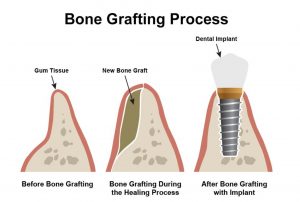
Bone grafting is a common procedure which allows for the correct position and placement of the dental implant
Causes of Jawbone Loss
There are several causes of bone loss, including:
- Tooth extraction: The roots of your natural teeth are embedded in the jawbone and when you chew and bite, you stimulate the bone. When teeth are removed and not replaced, the jawbone is no longer receiving stimulation. This can cause the jawbone to deteriorate.
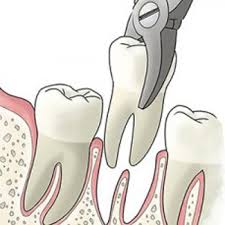
Tooth extraction leaves a hole in the jaw bone. Although new bone will grow it may not be enough and grafting may be necessary
- Gum disease: Over time, ongoing infections caused by periodontal disease destroy the bone that supports your teeth.
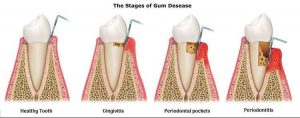
Periodontal disease causes bone loss over time. Early detection and treatment can help to avoid tooth loss and the need for grafting.
- Dentures: Because dentures are not anchored to the gums, they do not provide stimulation to the underlying bone. This will eventually lead to bone deterioration.
- Sinus deficiencies: If you have upper molars removed, air pressure from the maxillary sinus causes deterioration of the jawbone. This causes enlargement of the sinuses. Over time, this condition can cause significant bone loss.
- Trauma: If you lose teeth due to an accident or injury, this can cause bone loss. Sometimes the bone deterioration may occur years after the initial trauma.
Dental Bone Grafting Explained
A dental bone graft is a surgical procedure designed to repair or rebuild part of your jawbone. During the procedure, the surgeon will fold back an area of your gum and clean the tissue. The bone graft material is put in place and your gum will be replaced over the graft.
Typically, the grafting material is processed bone. Once in place, it forms a scaffold around which your jaw deposits new bone cells. Eventually, your body will absorb the graft material as it becomes replaced by new bone.
Different Types of Dental Bone Grafting
There are several types of dental bone grafting. The type you have will usually depend on the location and the extent of the bone deterioration.
- Socket grafts: This type of graft is usually performed as soon as a tooth is removed. It prevents deterioration of the gum ridge. Bone material is placed in the socket left by the extracted tooth.
- Block bone grafts: This type of graft is performed when the ridge of the jawbone has already deteriorated. This is required when large sections of bone need to be regrown.
- Sinus lift grafts: This procedure is used when a patient needs an implant in the upper jaw when the maxillary sinus cavity is too close to the site of the implant.
Who is a Good Candidate for Dental Bone Grafting?
Here are the most common reasons why you might need a bone graft:
- Dental implants: If you are having dental implants to replace missing teeth, you are a good candidate for bone grafting.
- Tooth loss: If you have experienced tooth loss due to trauma or gum disease, a bone graft can stabilise your jaw.
- Bone loss: The shape of your face may have been affected due to bone loss. A bone graft can restore your natural features.
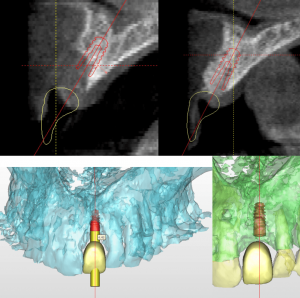
An example of a bone graft which allowed for the placement of a dental implant. It took 4 months for this graft to mature enough for implant placement
Frequently Asked Questions About Bone Grafting
Here are some of the most commonly asked questions about dental bone grafts:
Is a dental bone graft painful?
A dental bone graft that does not require bone to be removed from another area of your body is a relatively simple procedure. You will be given anesthesia before the graft, so you will not feel any discomfort during the procedure. You may feel minor pain for 2-3 days after the graft, but you can alleviate it with over-the-counter pain medication. If the graft material was removed from your body, recovery can be more painful and last for serval weeks. If your discomfort is severe, your dentist may prescribe pain medication.
How long does it take to heal from a bone graft?
The bone graft material does not remain in your body, it simply acts as a scaffold to support the growth of new bone. Over time, your body will remove the minerals from the graft material and replace them with new bone cells. Initial healing can be 1-2 weeks. The complete maturing process can take up to six months. Simple grafts can be successful in as little as 3-4 months.
Where does the bone graft material come from?
In some cases, the material may be harvested from the patient’s body. If this is the case it is usually taken from the jaw, chin or in the local extraction site. It may also come from a human, animal donor or be synthetic. Your dentist will explain to you what type of graft is required before the procedure.
How safe is bone grafting?
Bone grafting is considered generally safe, particularly if the grafting material is harvested from your own body. Grafting materials sourced from animal bone pose little threat of infection because they are screened and processed before they are used for surgery. Grafting is a commonplace procedure that ensures greater success of any dental implants placed.
Can my body reject the graft?
Rejection of graft material is rare. The main concern is how much bone your body will form around the graft. If it does not stimulate enough bone growth, another graft may be added when the dental implant is inserted. Generally grafting is predictable and successful.
Can bone grafting be avoided?
Removal of infected teeth, reduction of gum disease and early dental implant placement can reduce the chances of requiring a bone graft. Recent technology has allowed for smaller dental implants and this has reduced the need for grafting since less bone is required for support.
Can you eat after a bone graft?
It is recommended that you eat on the other side of your mouth to the graft for 3 to 4 weeks. There are no restrictions on the type of food you can eat. You can continue to eat as you would normally. You should avoid putting pressure on the area of the bone graft or putting your finger in your mouth. Other types of grafts need to be avoided for 3-6 months. Your dentist will give you specific instructions on how to care for your graft to allow for optimal healing.
Sydney Road Dental Care has invested in the technology and training to provide you with these benefits. Please contact us to find out if a dental implant and grafting is suitable for you.